杭州卷 · Hangzhou
Landscape
The hills are not a wall; they are the lake’s eyes and brows.
Hangzhou’s hills are not steep, but they are full of feeling. West Lake is ringed on three sides: Precious Stone Hill and Ge Ridge to the north, North Peak and Feilai Peak to the west, Wu Hill and Jade Emperor Hill to the south. The hills are not high — what matters is that they face the lake. The hills are graceful because of the lake; the lake is secluded because of the hills. Four essays: from the lake to the hills, to the tea slopes in the hills.
West Lake
West Lake: a mirror
West Lake began as a coastal lagoon. From the Han and Tang onward, generation after generation dredged it, and so kept this mirror. Untended, the lake would silt up. Su Shi said “West Lake compares to the fair Xizi” because a lake, like a person, needs dressing — dredging is dressing, building causeways is dressing, planting peach and willow is dressing.
Three islets lie in the lake: Little Yingzhou, Mid-lake Pavilion, and Ruan’s Mound. They are not large; what matters is that they face each other across the water. Stand on the Su Causeway and look at the three pools mirroring the moon — the moon prints on the pool, the pool prints on the moon, and the lake becomes a mirror, reflecting the viewer’s own heart.
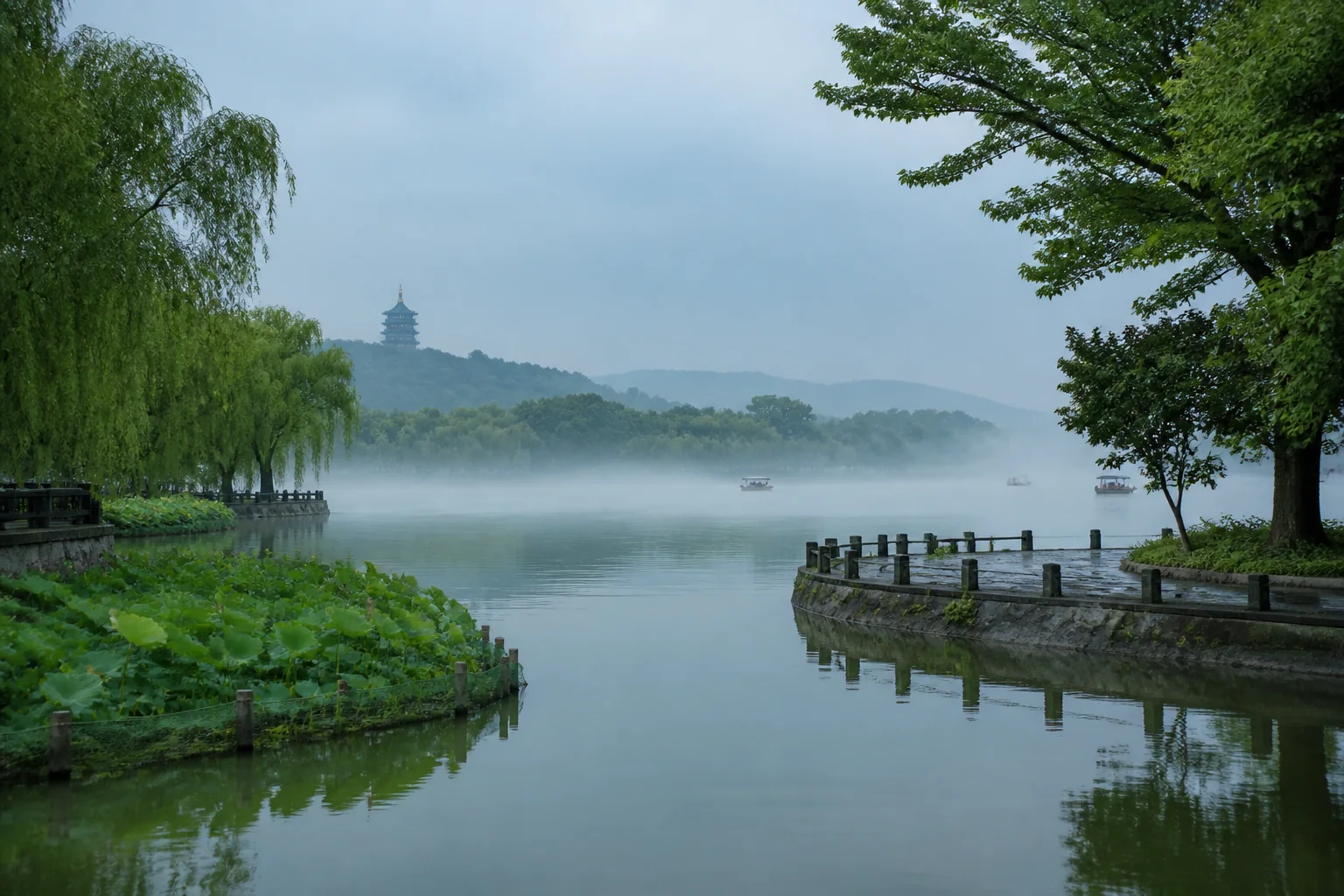
Hills around the Lake
The hills around the lake: between eyes and brows
The hills of West Lake are not high, but each has its own temper. Precious Stone Hill faces the water; Ge Ridge hides a path; North Peak is far; Wu Hill is near the streets. Between hill and lake there is no wall, only eyes and brows — the hill looks at the lake, and the lake looks back. How Wu Hill looks at the city is written in Places.
The best place to see the hills is not from their tops but from the lake. Take a boat to the middle, watch the shadows of the four hills enter the water, and you will know what “cloud-hills on three sides, the city on one” means. The hills are the city’s background, and also its breath.
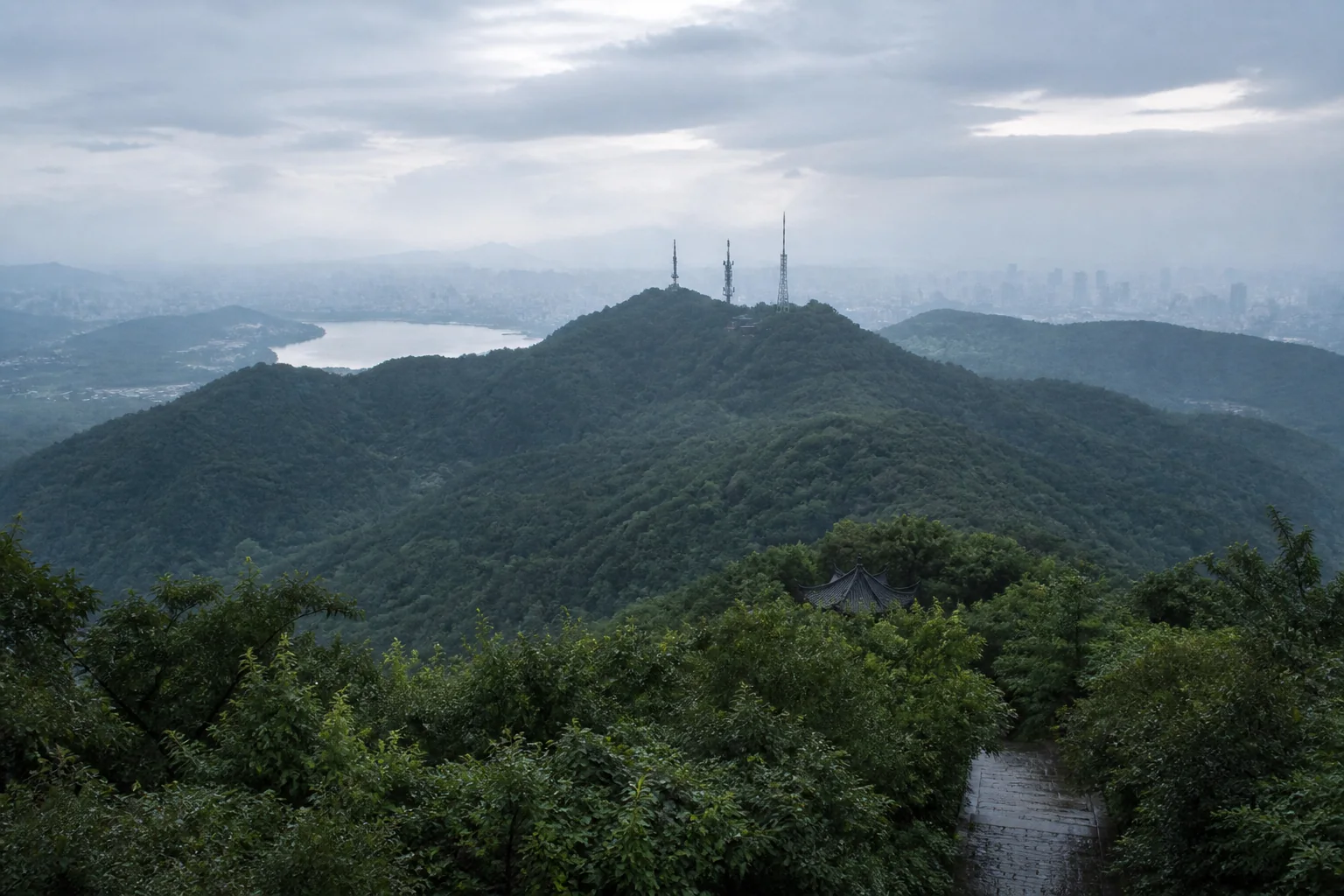
Tea Hills
Tea hills: the heights are gardens
Hangzhou’s hills are not high. What stands on the heights is not a temple but tea. Lion Peak, Wengjia Hill, Manjuelong — bushes cling to sandy slopes, much cloud, little sun. The hills give the ground, not the craft; one bud and one leaf belongs to Craft.
Spring walks slowly on these slopes. Slowly, the bushes take the cloud into the leaf. From the tea hill, West Lake is far; between the rows, the hill is underfoot.
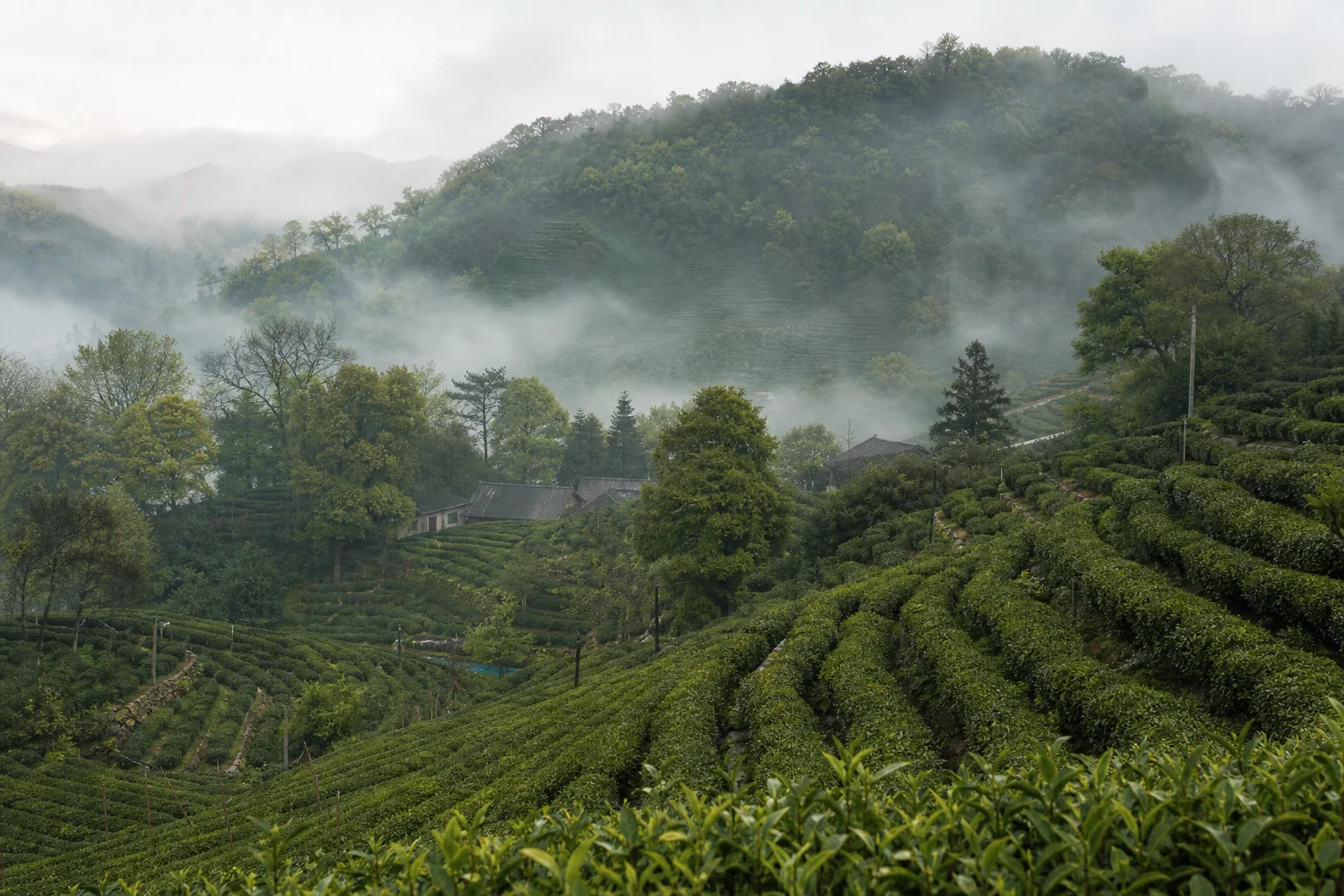
Rivers and the Canal
Water: the lake’s context
The water of West Lake comes down from hill springs and goes on to river and sea. Precious Stone Hill and Ge Ridge have springs; the most famous is Hupao Spring in the south — “Longjing tea leaves, Hupao water” is a pairing that came later, and became a pride.
Water comes from the hills, pauses in the lake, then walks toward the canal and the Qiantang. The lake is the water’s inn, and also its mirror. Once water leaves the hills, it becomes the human world — and the next chapter follows these waters.
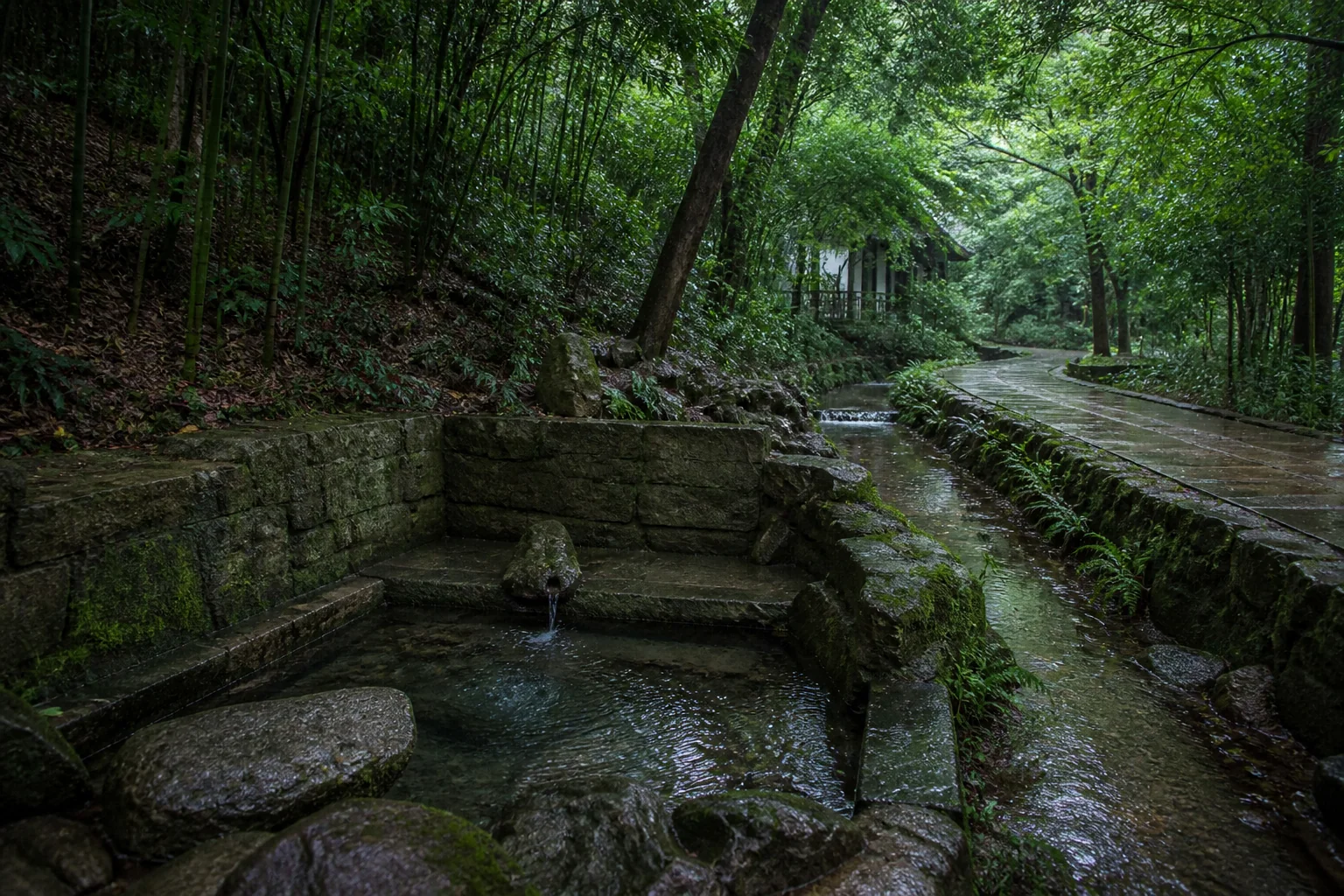
The lake has hills, the hills have tea. Landscape is read; walk toward the city.
Next · Places