杭州卷 · Hangzhou
History
How a city became a capital, and how it laid the title down.
Before Hangzhou was Hangzhou, this ground already knew how to make a city. Liangzhu is the earlier city; Wuyue made Hangzhou a metropolis of the southeast; the Southern Song made it a capital; after the capital was laid down, lake and hills remained. The canal is woven into the last entry as fact. Qian Liu’s birth, the peaceful handover, and the family precept are written in Lin’an.
c. 5300–4300 years ago
Liangzhu: an earlier city
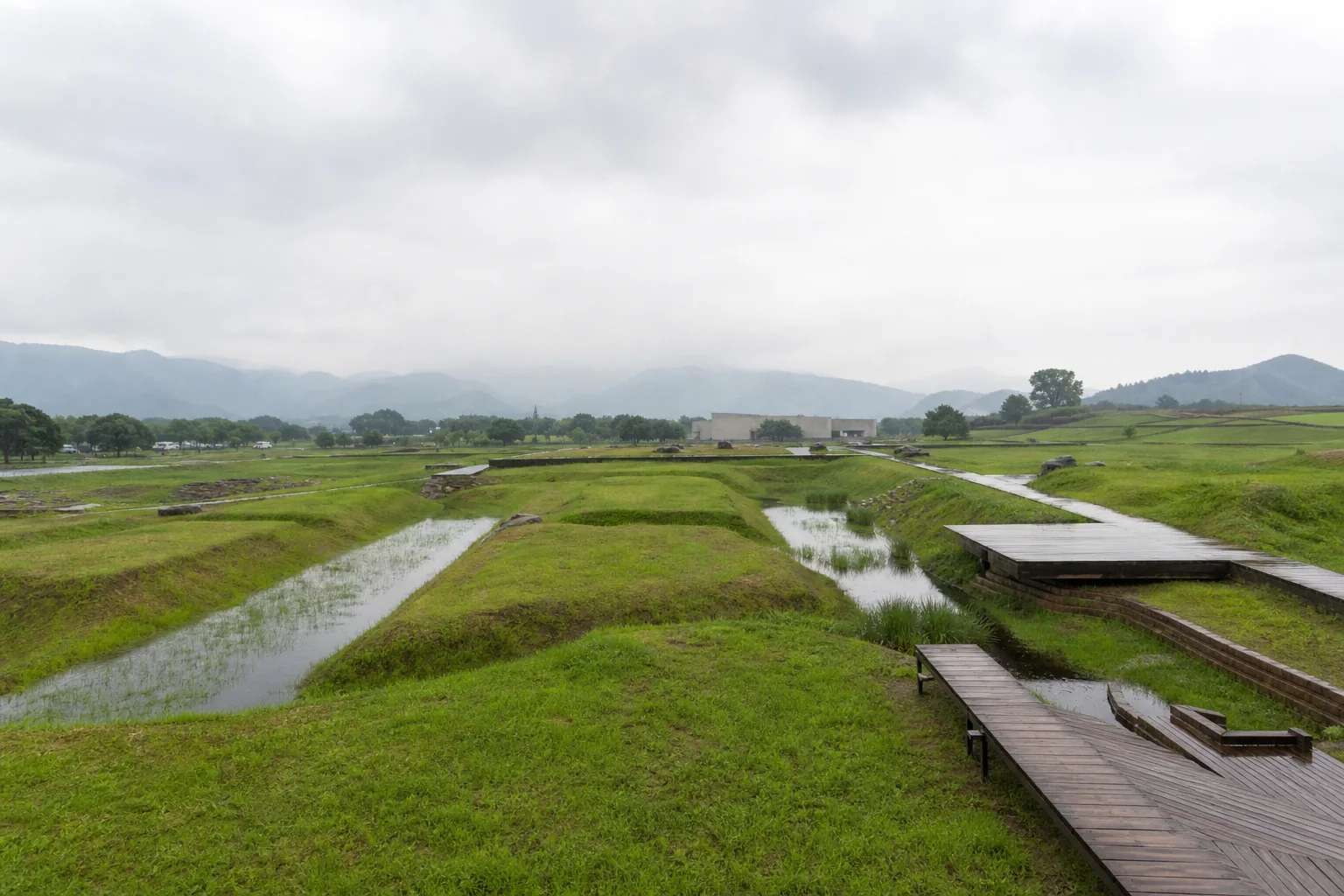
Before Hangzhou was Hangzhou, this lowland in Yuhang already knew how to make a city. Rammed-earth walls, a circling moat, dams at the foot of the hills — stop the water, gather the people. Jade cong and bi are ritual objects, not scenery.
Liangzhu does not dream of later capitals. Wuyue building the outer wall, the Southern Song raising a prefecture and a capital — each is making a city again. It only says the word “city” first.
907 · Five Dynasties
Wuyue: the capital at Hangzhou
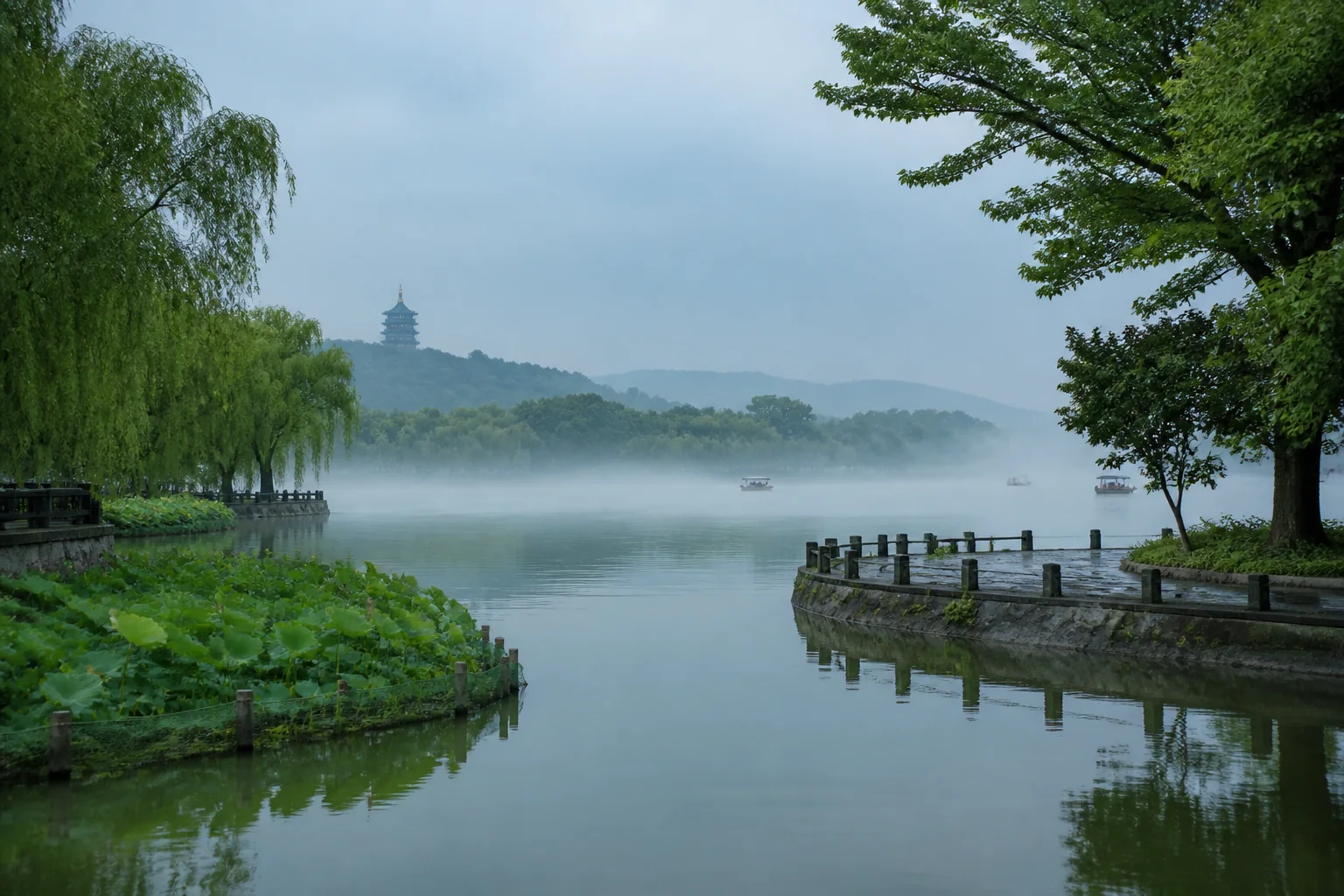
In 907 Qian Liu was enfeoffed as King of Wuyue and made Hangzhou his capital. He built the outer wall, walled the Qiantang tides, and dredged West Lake, turning a prefectural town into a metropolis of the southeast. Much of the ground you can still walk was laid then.
Qian Liu was a man of Lin’an — this one sentence only. The mountain was his origin, the water his destination. Birth, holding the peace, and the family precept are written in Lin’an.
1138 · Southern Song
The Southern Song: borrowed peace and splendour
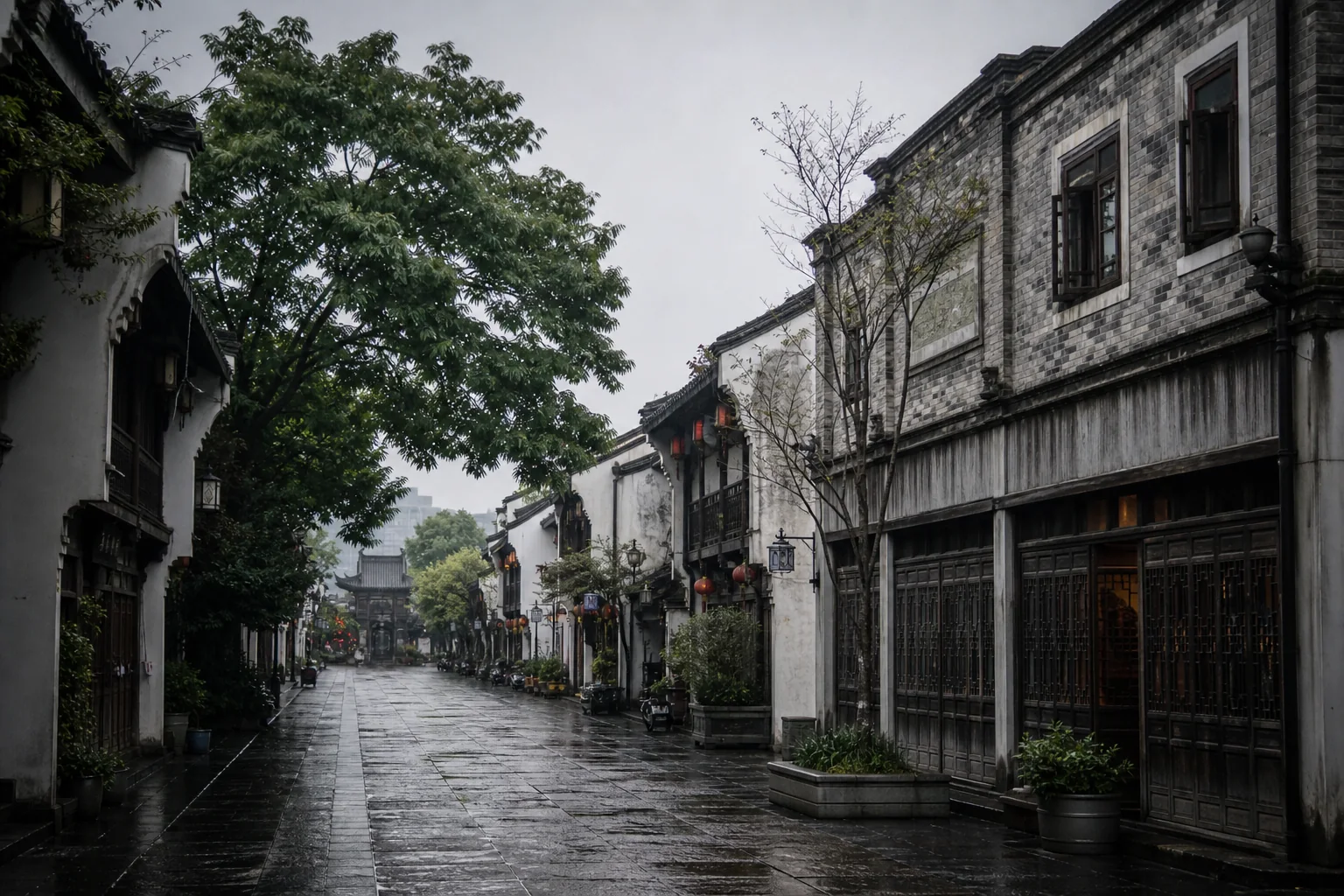
In 1129, the third year of Jianyan, Hangzhou was raised to Lin’an Prefecture. In 1138, the eighth year of Shaoxing, Emperor Gaozong made it his capital. The north was lost; the court crossed south; Hangzhou became the “temporary residence” — the temporary capital. The residence lasted nearly a hundred and forty years, and the temporary became permanent.
Southern Song Hangzhou was splendid: song and dance on West Lake, day and night without end; shops on the Imperial Street, open through the night. Lin Sheng wrote “Hills beyond hills, towers beyond towers; when will the song and dance on West Lake end?” — satire, but also reportage. The satire is of the borrowed peace; the reportage is of the splendour. How the two characters were lent to a capital is written in Lin’an.
Ming to the present
Back to the human world
After the Southern Song fell, Hangzhou was no longer a capital and returned to the human world. In Ming and Qing it was a prefectural city, and also the seat of the province; after the Republic it remained a provincial capital; today it is a capital of e-commerce. The city has changed; the lake remains, and the hills remain. The canal remains: boats north of Gongchen Bridge have changed generation after generation; the bridge remains, the river remains — once the cord between north and south, now a water in the city.
West Lake, the Grand Canal, and Liangzhu are World Heritage Sites. Three listings are not three badges. They are the three layers this city still stands on after laying the capital down: lake, river, and an earlier city.
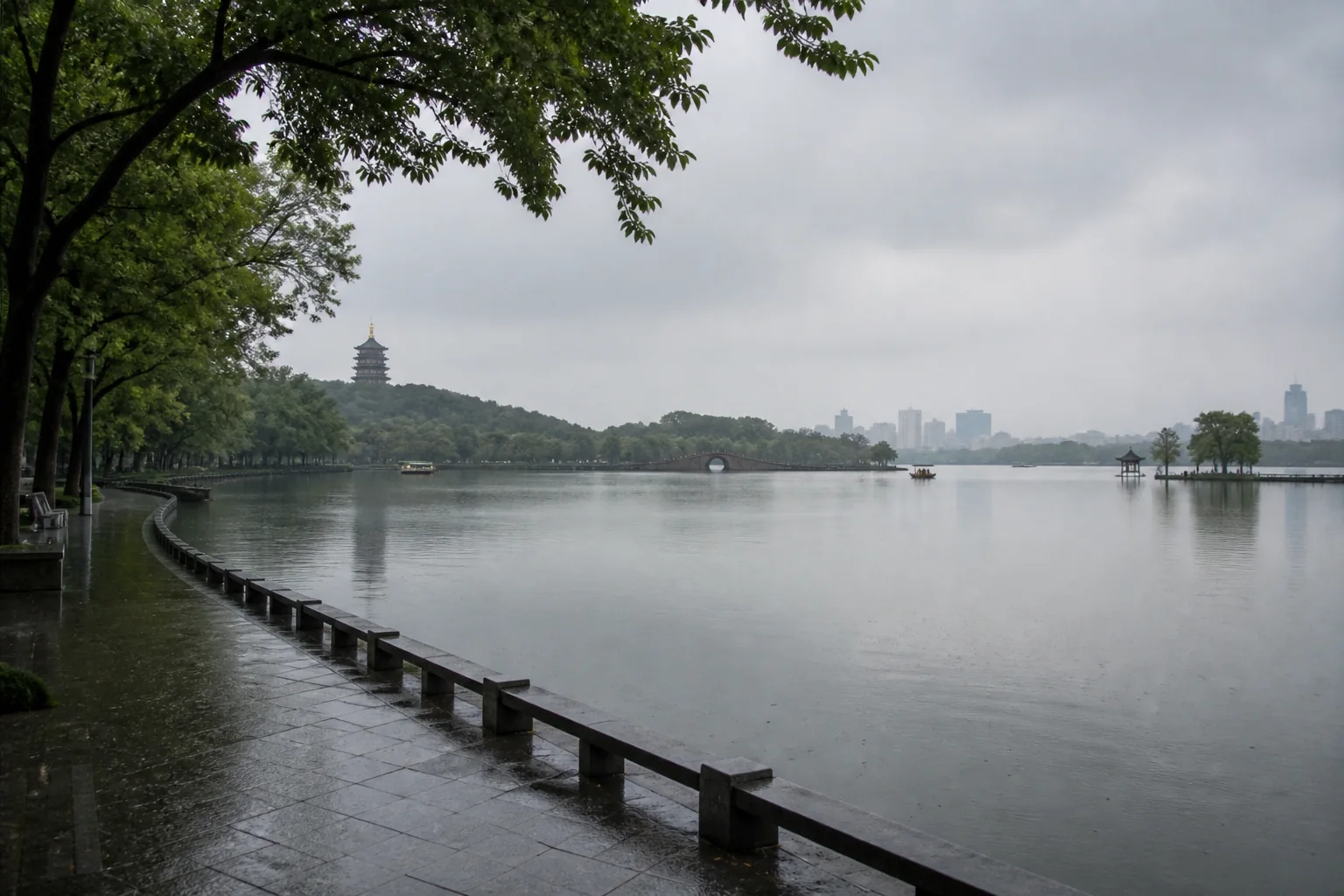
Capitals fall; lake and hills do not. Volume I closes here.
Back to the opening