杭州卷 · Hangzhou
Craft
Objects are the joints between people and their lake and hills.
Where the lake reaches the human world, goods appear. Hangzhou’s Longjing tea, silk, crafts, and dishes are not museum relics; they remain livelihoods and daily objects in Hangzhou hands.
Longjing Tea
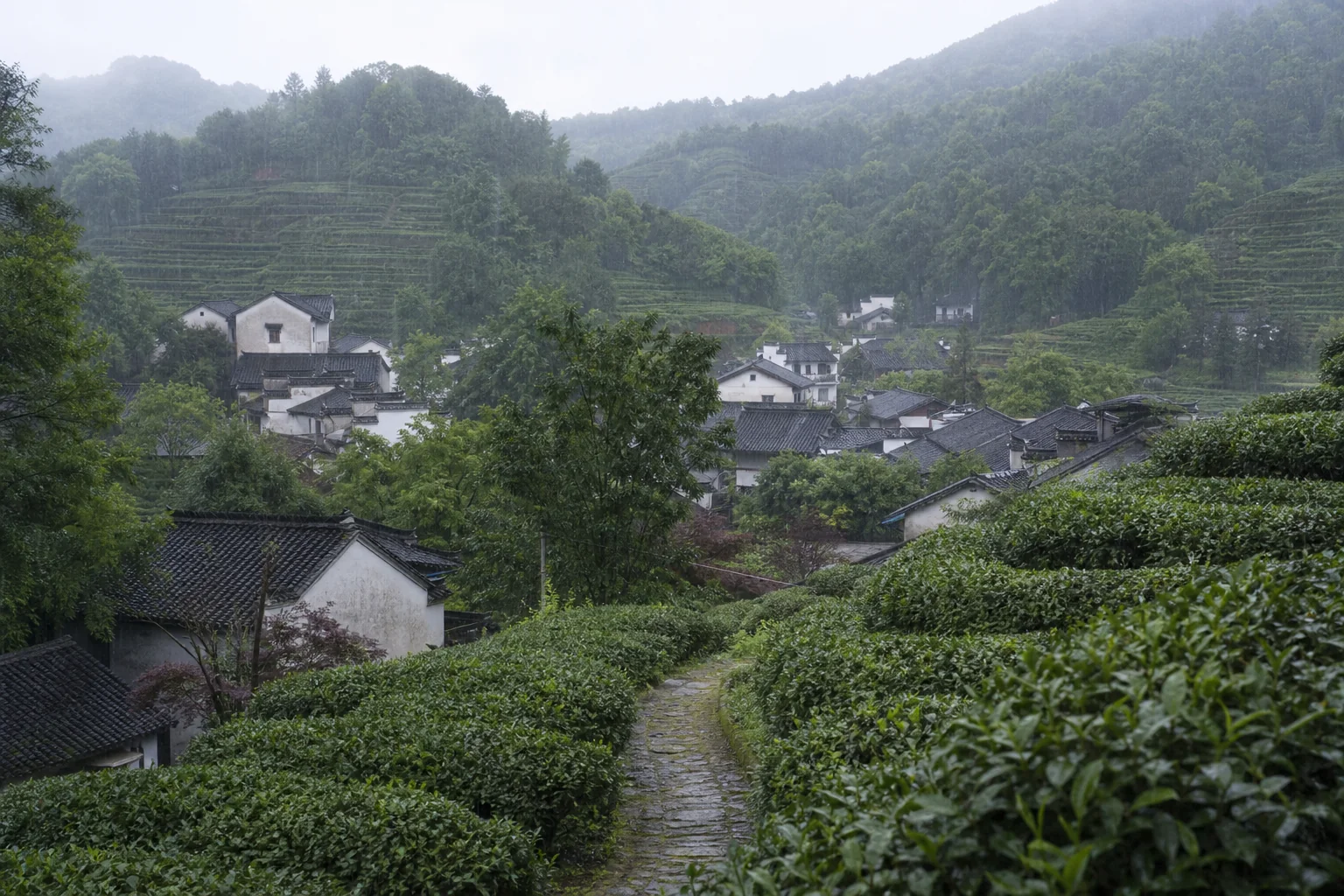
Longjing tea: one bud and one leaf before Qingming
One bud and one leaf before Qingming. The tea of Lion Peak, Wengjia Hill, and Manjuelong is dear not because it is early, but because the hand must be light and the heart still. The cloud of the hills is written in Landscape; this entry is how people take the leaf from the branch.
Around Qingming the tea farmers go up. One bud and one leaf is not a ritual adjective; it is a measure in the hand. The tea is given by the hills, and also by the people — the hills give weather, the people give patience.
Silk
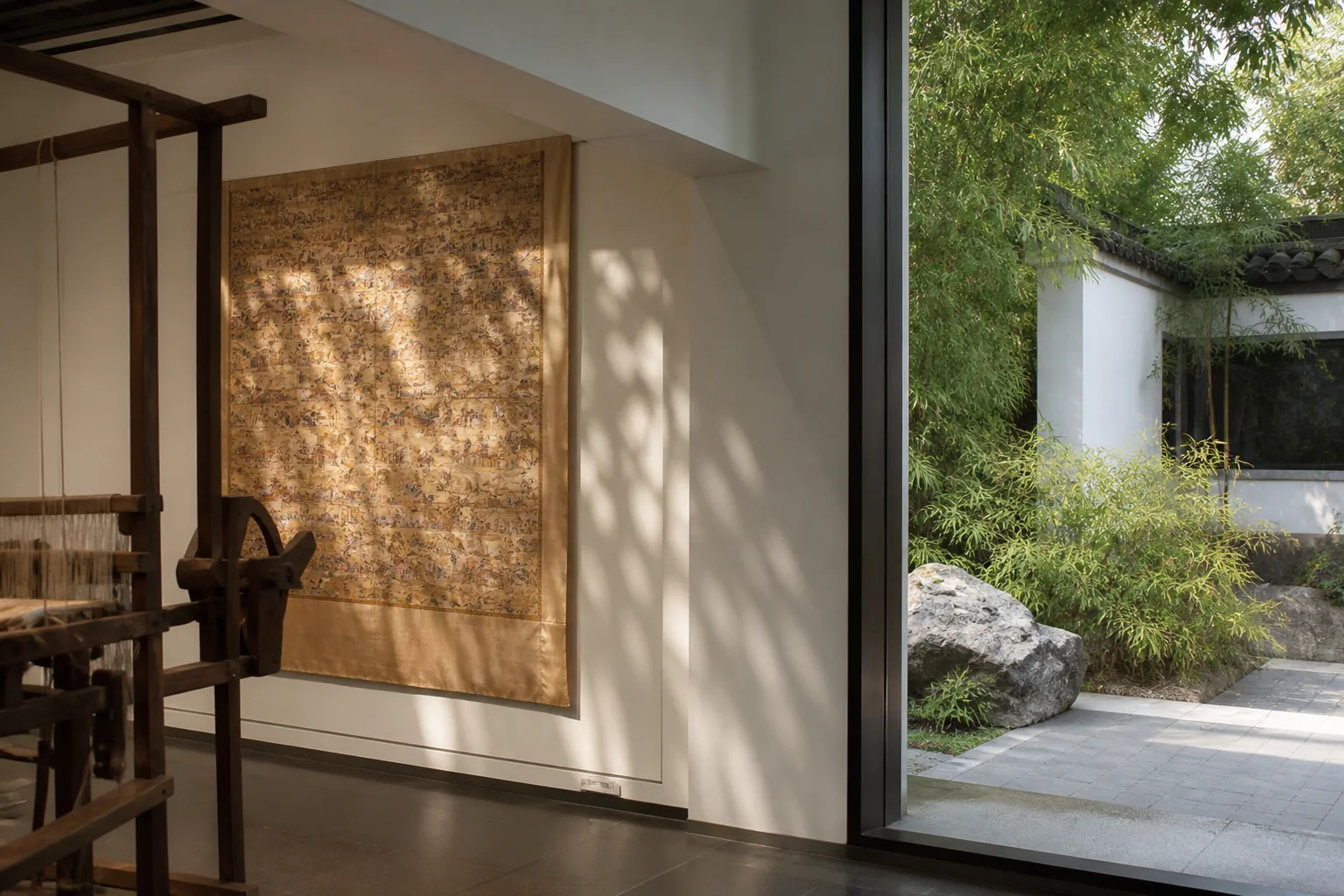
Silk: soft gold on the lake
Hangzhou silk was already famous in the Tang; only after the Southern Song did it become a centre of Jiangnan weaving. From silkworm to thread, from thread to silk, dozens of processes: soft is the hand, hard is the craft.
The names of the silk shops change; the sound of the looms remains. Silk is not an antique in a window. It is the clothing Hangzhou people still wear.
Craft
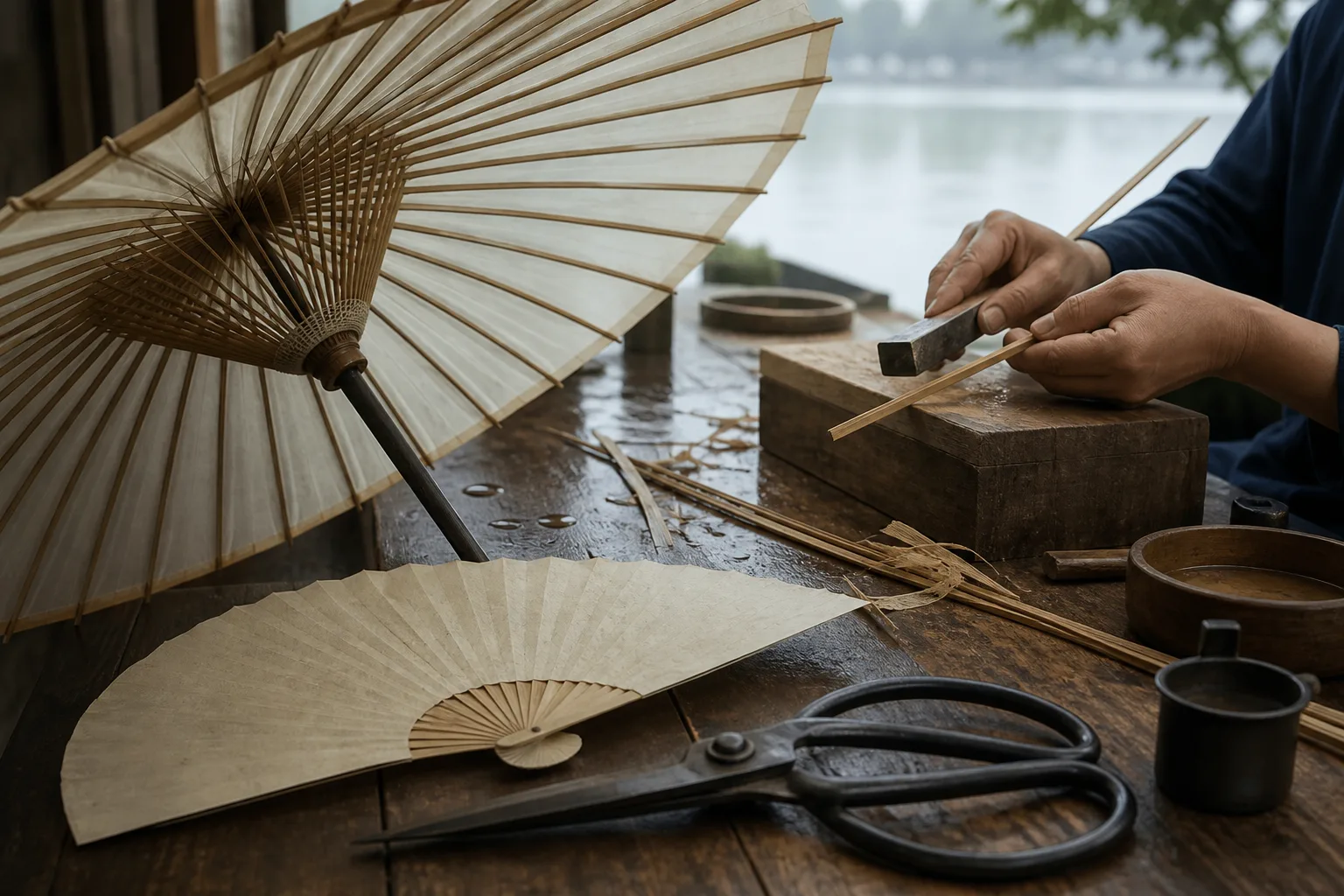
Craft: umbrellas, fans, scissors
Umbrella, fan, scissors — three things still in use. The West Lake silk umbrella, silk on bamboo, opens into a light shade; a Wang Xing Ji fan shakes out a breath of sandalwood; Zhang Xiaoquan scissors still bite cloth the same way.
Craft is alive because the lanes still use it. Behind glass, it becomes heritage.
Food
Hangzhou dishes: the taste of the lake
Hangzhou dishes are the taste of the lake. West Lake vinegar fish, Longjing shrimp, Dongpo pork, beggar’s chicken — each has a story someone attached. Legend ties the vinegar fish to Sister Song’s soup of the Southern Song; Longjing shrimp is tea meeting shrimp; Dongpo pork, the story goes, is what Su Shi left behind. Origins need not be proved; the taste is true.
The dishes are not on hotel menus. They are in the noodle shops and tea houses in the lanes. The stomach is solid, and also empty — solid in taste, empty in who once paid for a meal.
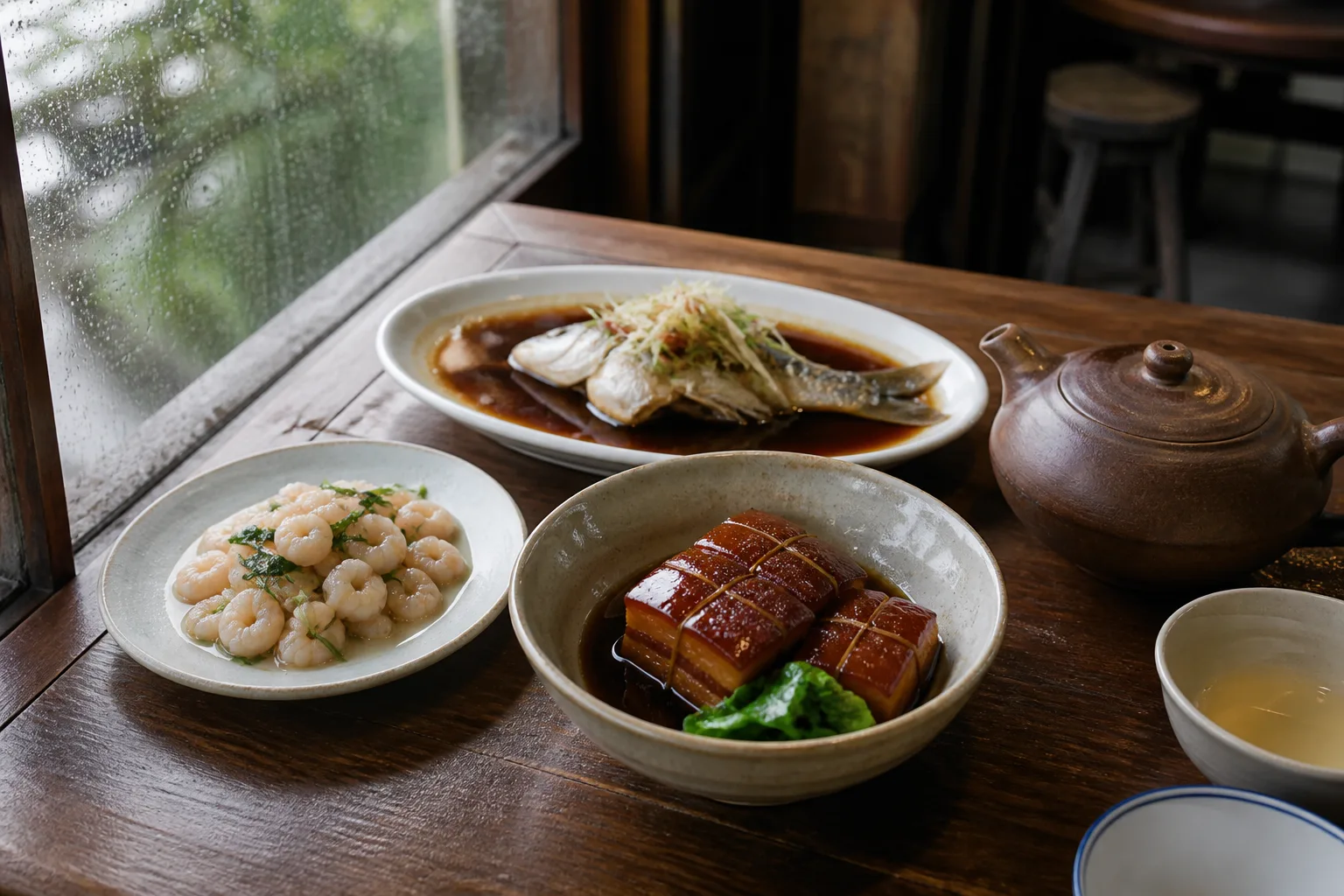
Every tea, every dish, has its season. Lake and hills raise the people; the people make history — the next chapter reads a city.
Next · History