临安卷 · Lin’an
Craft
Objects are the joints between people and their mountains.
Where water reaches the human world, goods appear. Lin’an’s hickory nuts, Changhua’s chicken-blood stone, Tianmu’s tea bowls — none are museum relics; all remain livelihoods and daily objects in mountain hands.
Chinese Hickory
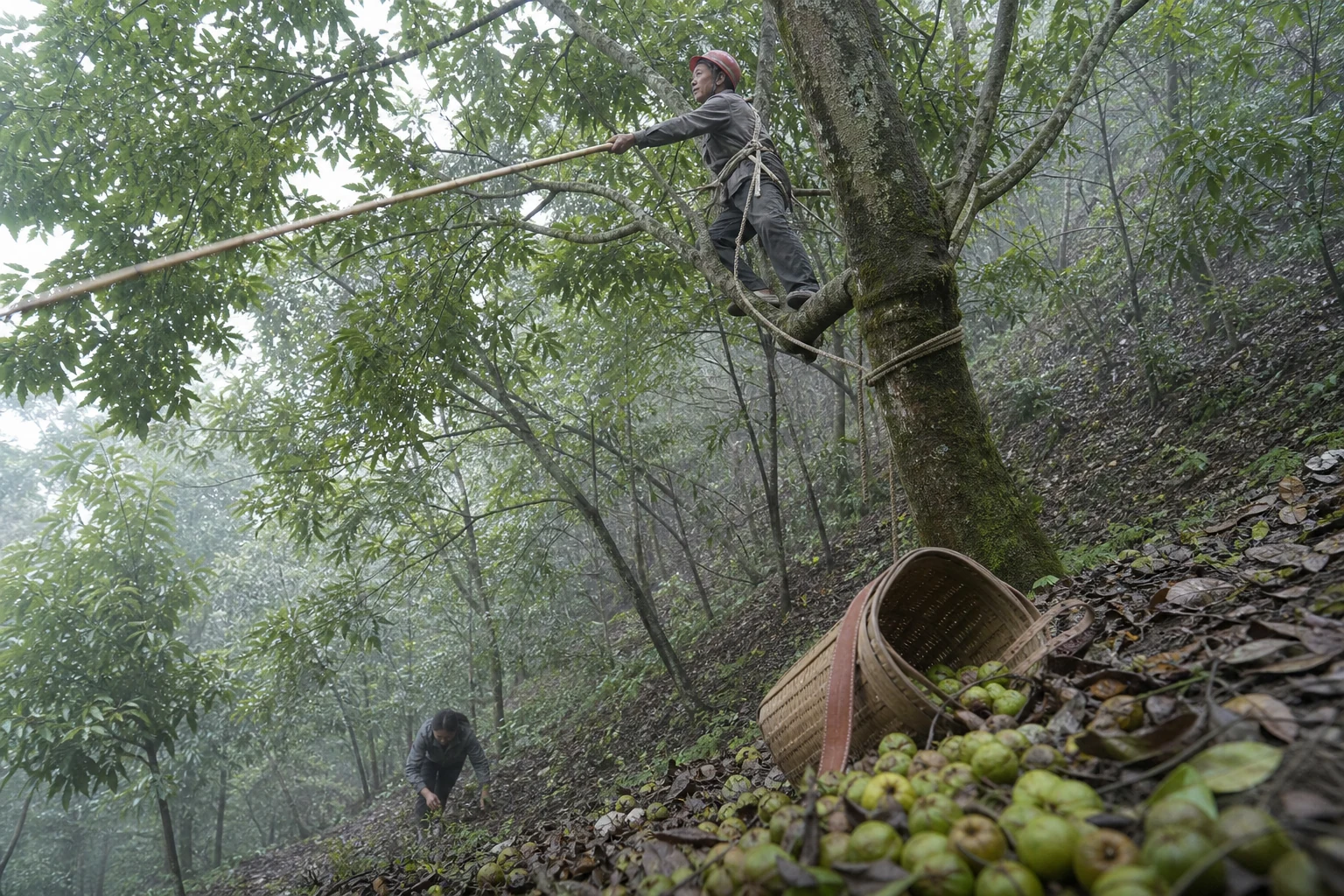
Hickory: the White Dew harvest
Hickory from the Tianmu hills is thin-shelled and fragrant. When White Dew arrives, mountain people climb the trees with long poles — “the opening of the poles.” Before the sky is fully light, the whole mountain rings with bamboo against branches, stroke after stroke, like rain on dry leaves.
It is the year’s most dangerous and most generous harvest. Hickory trees grow on steep slopes; the climber must be steady, the pole must be true. A mountain family’s year hangs from those highest branches.
Changhua Bloodstone
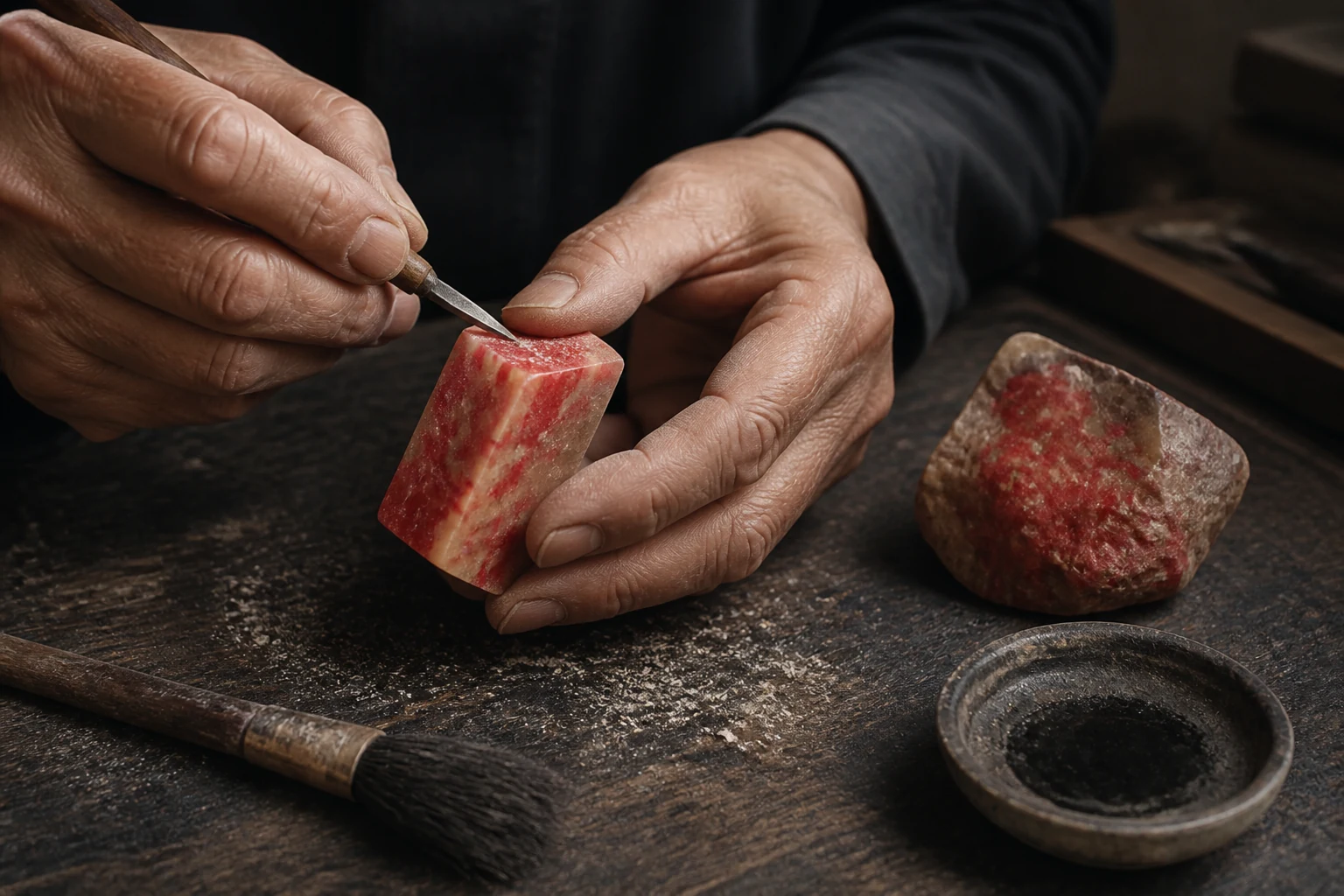
Chicken-blood stone: cinnabar in rock
From Changhua town comes chicken-blood stone — a warm, fine-grained stone veined with cinnabar red as fresh blood, counted with Tianhuang and Furong among the “three treasures” of seal stones. Since the Ming and Qing, a fine seal on a scholar’s desk has most likely come from here.
Fine stones grow rarer; the carving craft endures. A bloodstone seal is cinnabar dug from the mountain, and an inch of landscape on a scholar’s desk — the stone may run out; the landscape does not.
Tenmoku Ware
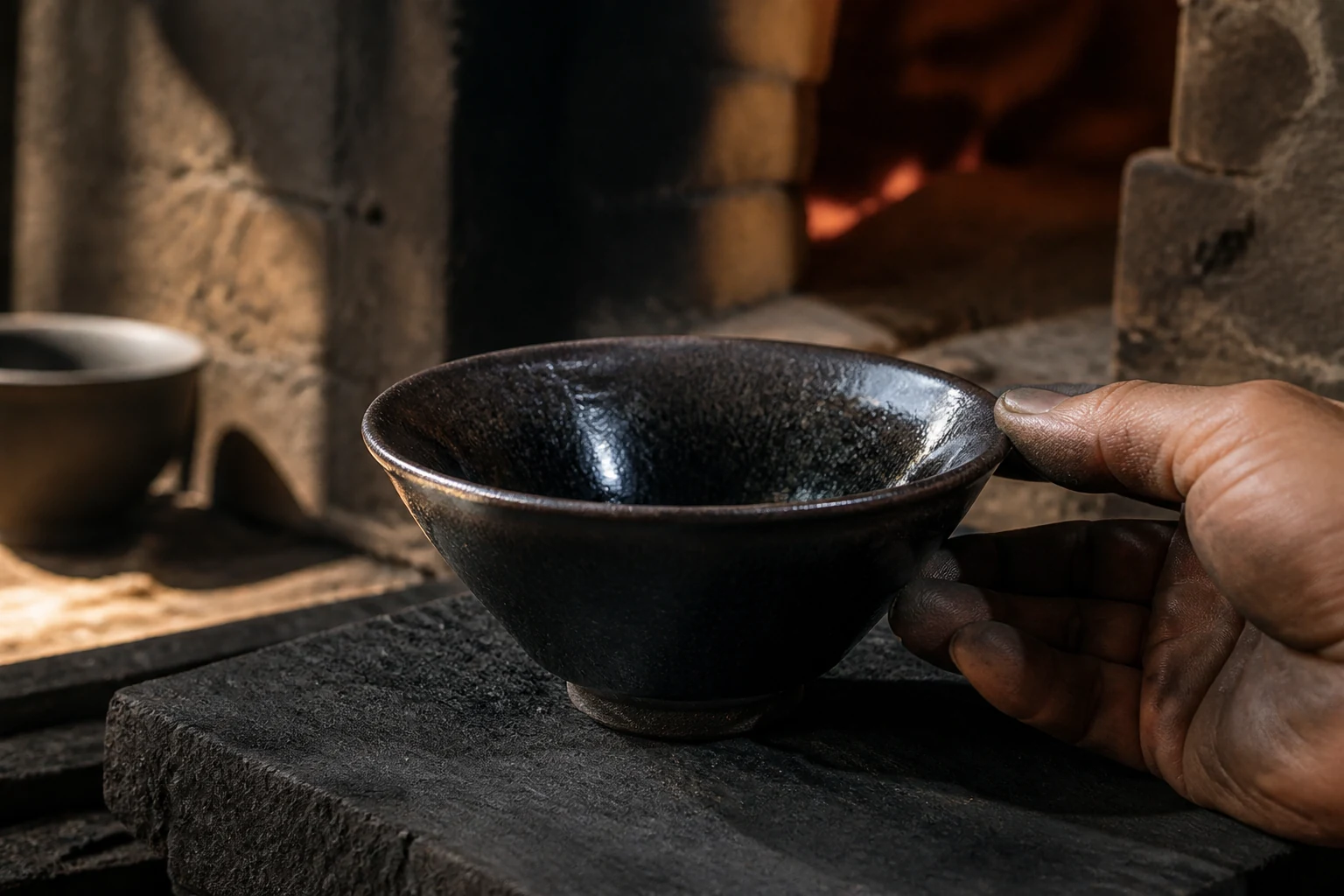
Tenmoku: a night sky in a bowl
In the Song dynasty, kilns around Tianmu fired black-glazed tea bowls. Japanese monks came to the mountain for Chan study, and when they descended, a bowl rode in their packs. They carried it across the sea and called it “tenmoku” — to this day the word means black-glazed tea ware in Japanese. One bowl’s name became the name of a whole class of vessels.
Hare’s fur, oil-spot, yohen — the names most often given to crystals in black glaze. The finest yohen bowls were fired at the Jian kilns in Fujian; they rest today in Japanese museums. The fire in the Tianmu hills is another black glaze — and it is being lit again.
Villages
Villages: the mountain people
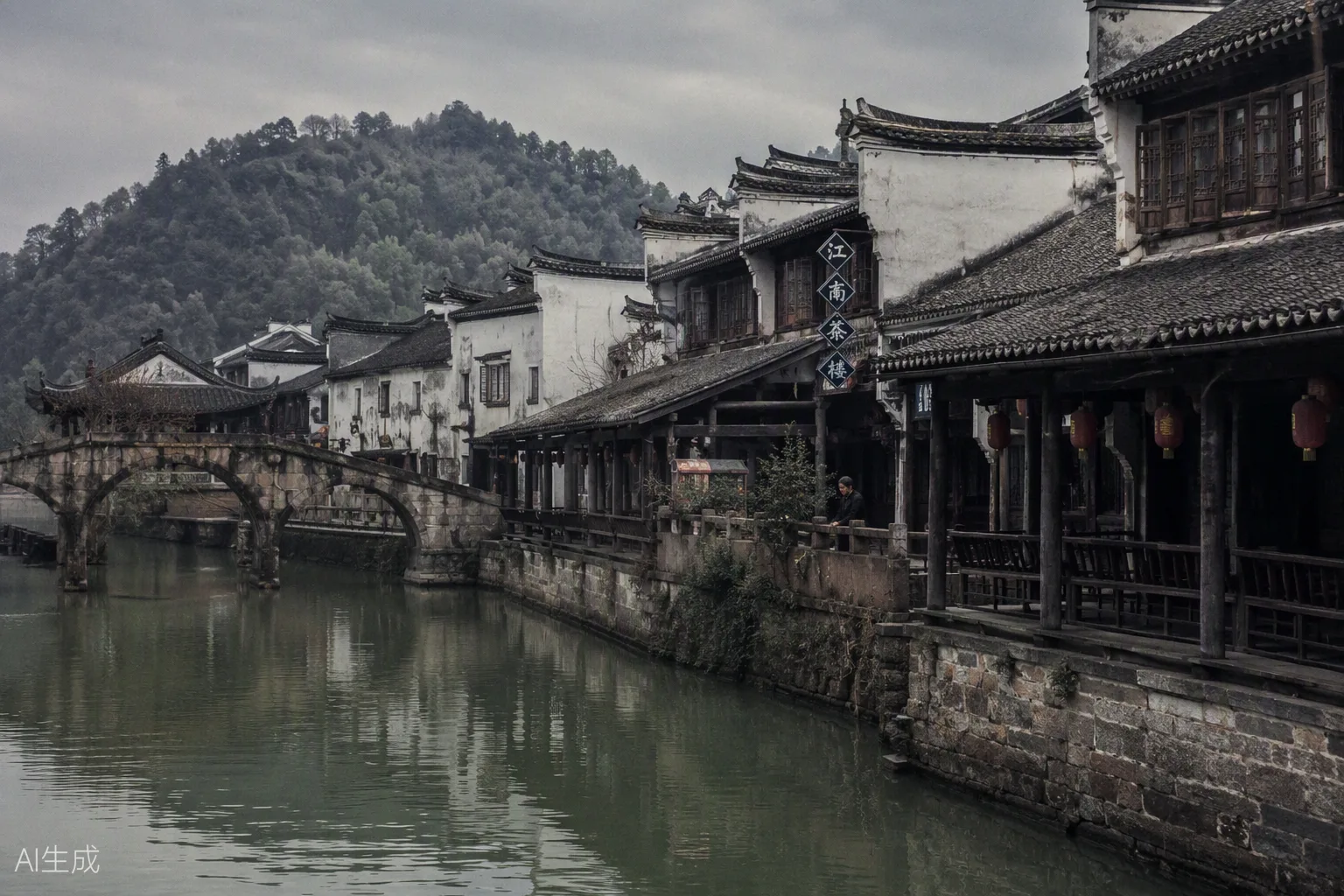
Lin’an’s villages lean against the mountains. Tea in spring, cool air in summer, hickory and torreya in autumn, cured pork and dried bamboo shoots in winter. How Zhinan and Heqiao stand as places is written in Places; this entry keeps only how people still keep the year.
In the end, local goods are local people. The mountains remain, the water remains, the people remain — and the order of the seasons remains.
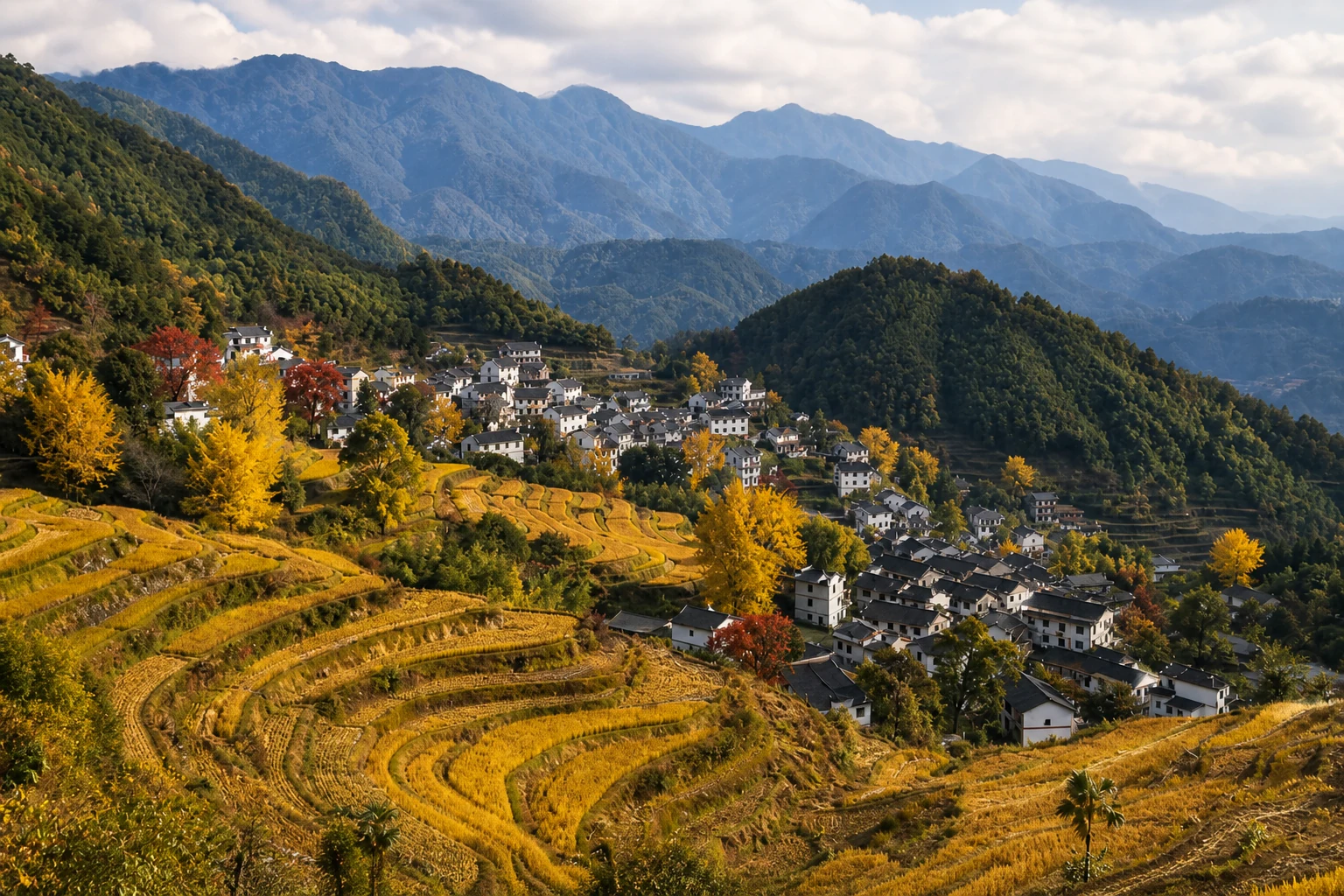
Every village, every craft, has its season. Mountains and water raise the people; the people make history — the next chapter reads a single surname.
Next · History